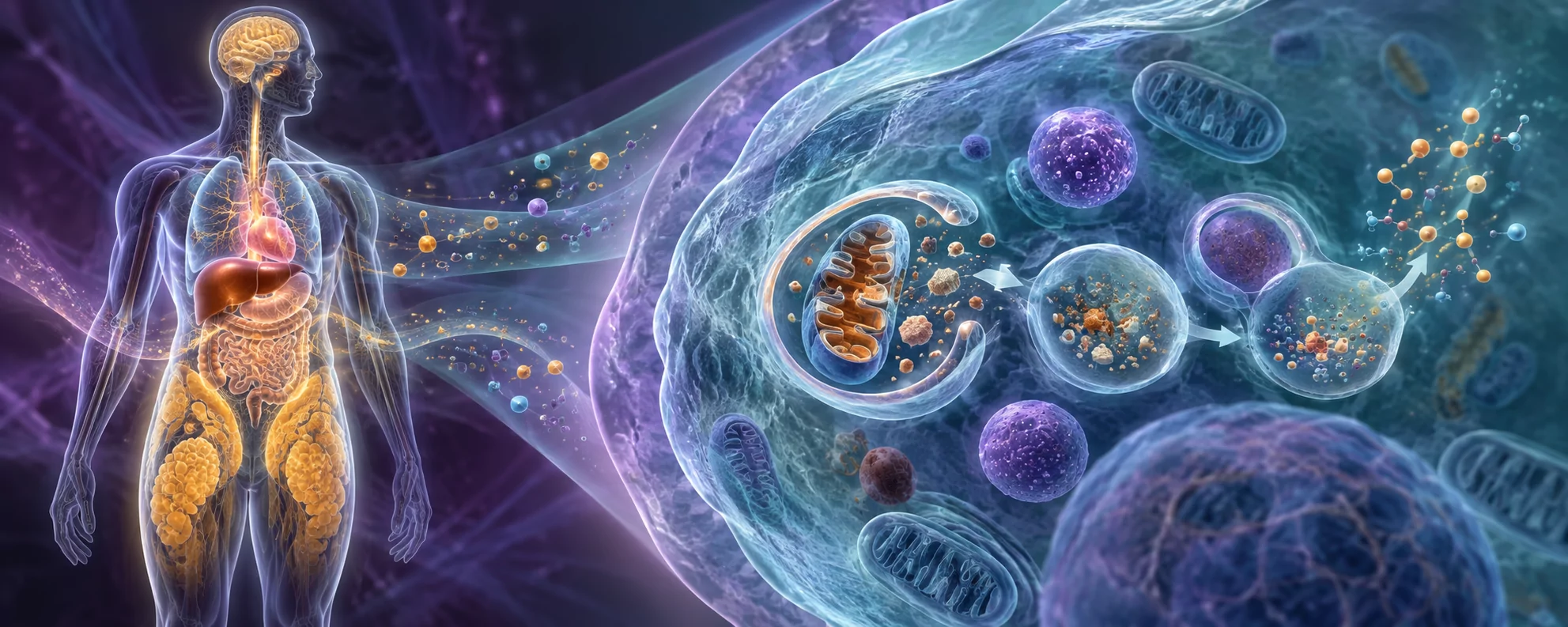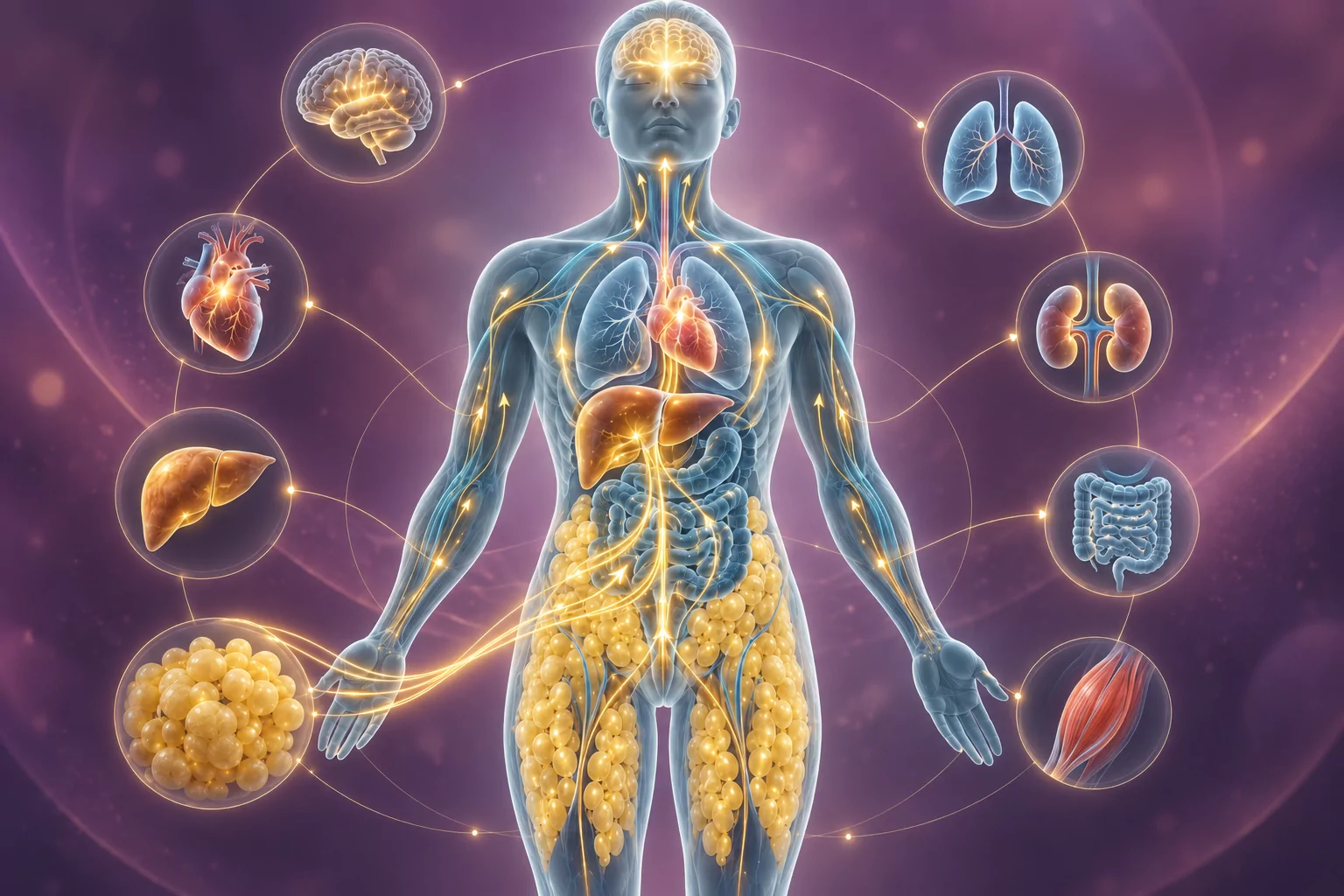
The Selective Use of the Body’s Own Resources During Fasting
One of the most fascinating ideas in Natural Hygiene is autolysis.
When food is no longer supplied from outside, the body must obtain energy and raw materials from within itself.
But it does not appear to consume itself randomly.
It mobilises some resources readily, protects others more strongly, changes priorities as the fast progresses and continuously reorganises the way its own materials are used.
Herbert M. Shelton described autolysis as the enzymatic process through which the body breaks down its own tissues and converts them into material that can be used by tissues of greater immediate importance. Within his broader understanding of fasting, this selective internal use of stored material was one of the mechanisms that made prolonged fasting possible.
Modern biology uses the word autolysis differently.
That difference is important.
What Hygienists Meant by Autolysis
In contemporary biological terminology, autolysis generally refers to the breakdown of cells or tissues by their own enzymes, particularly after severe cellular damage or death. The formal biomedical definition is essentially “self-digestion” by endogenous enzymes.
That is much narrower than Shelton's use of the word.
For the early Hygienists, autolysis was almost an umbrella concept for the body's ability to live upon itself during fasting.
It included the mobilisation of stored fat, the use and recycling of proteins, the absorption of stored material, changes in tissues and what they interpreted as the removal of unnecessary accumulations.
Today we would separate these observations into several processes:
- lipolysis and fatty-acid oxidation;
- protein turnover and proteolysis;
- gluconeogenesis;
- tissue remodelling and resorption;
- cellular recycling;
- autophagy and selective autophagy.
So when we read Hygienist literature, translating autolysis simply as the modern biological phenomenon of autolysis can be misleading.
They were describing something much broader: the internal economy of a fasting organism.
The Body Does Not Consume Itself at Random
This central observation has aged remarkably well.
Modern fasting physiology shows that the body follows a coordinated hierarchy of fuel use.
As incoming nutrients disappear, liver glycogen declines, adipose tissue increasingly releases fatty acids, ketone production rises and the organism reduces its dependence on glucose.
During prolonged food deprivation, adipose triglycerides become the major large-scale energy reserve for most tissues. At the same time, adaptations occur that help reduce the rate of protein breakdown and preserve functionally important lean tissue.
This does not mean that healthy protein is never used during fasting, it is: amino acids continue to participate in metabolism and gluconeogenesis, particularly during the earlier phases.
But the organism does not consume fat, muscle, liver, brain and other tissues at identical rates.
There is hierarchy.
There is regulation.
There are priorities.
The fasting body does not consume itself at random. It follows priorities.
This is perhaps the point at which nineteenth- and twentieth-century Hygienist observation and contemporary physiology come closest together.
Selectivity Is Built Into Biology
The idea of selectivity becomes even more interesting when we look inside the cell.
Autophagy — which we will examine separately — was once regarded largely as a bulk recycling process: when nutrients were scarce, cells would simply digest portions of their own contents.
We now know that this is only part of the story.
Cells also possess highly selective forms of autophagy.
Damaged mitochondria can be specifically recognised and removed through mitophagy. Other specialised mechanisms selectively target peroxisomes, portions of the endoplasmic reticulum, ribosomes, protein aggregates and other cellular structures. Molecular signals can effectively mark particular components for recycling.
This does not prove the full Hygienist proposition that prolonged fasting necessarily identifies every pathological structure in the body and consumes it before healthy tissue, but it demonstrates something important: biological recycling is capable of discrimination.
The organism is not simply dissolving itself indiscriminately.
Does the Body Prefer What It Needs Least?
Natural Hygiene takes the idea further.
Shelton proposed that when the organism must nourish itself internally, material of lower immediate value is utilised preferentially, while structures essential to life are conserved for as long as possible.
From this perspective, excess fat, abnormal accumulations and less useful tissue become potential resources.
The claim becomes particularly interesting when people report changes during or after fasting that seem difficult to explain solely through weight loss: reductions in some swellings, changes in inflammatory tissue, greater joint mobility, alterations in longstanding deposits or other structural changes.
These observations exist. What remains much harder to establish is a universal hierarchy such as: pathological tissue first → healthy tissue afterwards.
Modern research has not demonstrated such a simple sequence across all tissues and diseases.
Yet the opposite picture — a body consuming every tissue indiscriminately — is also incorrect.
Fasting metabolism is selective at multiple levels.
The open question is how far that selectivity extends.
Can the same biological logic that prioritises adipose reserves over vital protein and damaged mitochondria over functional mitochondria also contribute to selective remodelling at the level of whole tissues?
That question remains worth asking.
Selective Does Not Mean Controllable
There is another aspect of fasting that distinguishes it profoundly from most conventional interventions: we cannot tell it where to act.
We cannot instruct the fasting organism:
remove this deposit first;
use this particular area of fat next;
reduce this cyst;
leave that tissue alone.
There is no external operator directing the process.
The organism responds according to its own metabolic priorities.
This is one reason fasting can feel so different from targeted treatment.
A pharmaceutical agent may be designed to bind to a particular receptor or alter a specific biochemical pathway.
Fasting changes the environment in which all those pathways operate.
Insulin changes.
Glucagon changes.
Nutrient signalling changes.
Fat mobilisation changes.
Ketones rise.
Cellular energy sensing changes.
Tissue turnover changes.
The intervention is global.
The responses are local.
Fasting is systemic, but its effects are not uniform.
Different organs and tissues respond according to their own structure, reserves, metabolic demands and regulatory mechanisms.
A Whole-Body Intervention
This is why fasting is sometimes described, particularly within Natural Hygiene, as something resembling a medicine that acts upon the whole organism.
The comparison needs some care.
Fasting is not a medicine in the pharmacological sense. Nothing is being administered and there is no single molecular target.
In fact, Shelton insisted that fasting itself did not “cure” disease; in his interpretation, withholding food altered the conditions under which the organism could carry out its own processes of repair and adaptation.
Yet the comparison remains useful in another sense.
Fasting cannot easily be confined to one organ.
A person does not undertake a “liver-only fast” or a “joint-only fast”.
The entire metabolic environment changes.
If a person begins fasting because of one particular concern, the body may nevertheless undergo changes elsewhere that were neither requested nor expected.
From the NHF perspective, this is one of the most interesting characteristics of fasting: its action is systemic, while the organism determines the priorities.
Internal Intelligence
Words such as intelligence make conventional physiology uncomfortable because they can sound as though we are attributing consciousness to individual cells.
That is not what is meant here.
Consider what the organism actually does during food deprivation:
- It senses falling nutrient availability.
- It adjusts hormone signalling.
- It mobilises stored energy.
- It shifts fuel towards fat.
- It manufactures the glucose still required.
- It produces ketones for organs able to use them.
- It modifies protein turnover.
- It reduces energy expenditure.
- It alters cellular recycling.
- It distinguishes, at cellular level, between components that should be retained and others that can be removed.
None of this requires conscious thought.
But it is difficult to look at the coordination of these processes without recognising an extraordinary capacity for self-regulation.
Calling that metabolic regulation, homeostasis or internal intelligence partly reflects the language in which we choose to describe the same phenomenon.
The body is continually answering one question: given what is available now, what must be preserved and what can be used?
The Difference Between Stored Energy and Living Structure
The immense importance of adipose tissue during fasting illustrates this hierarchy particularly well.
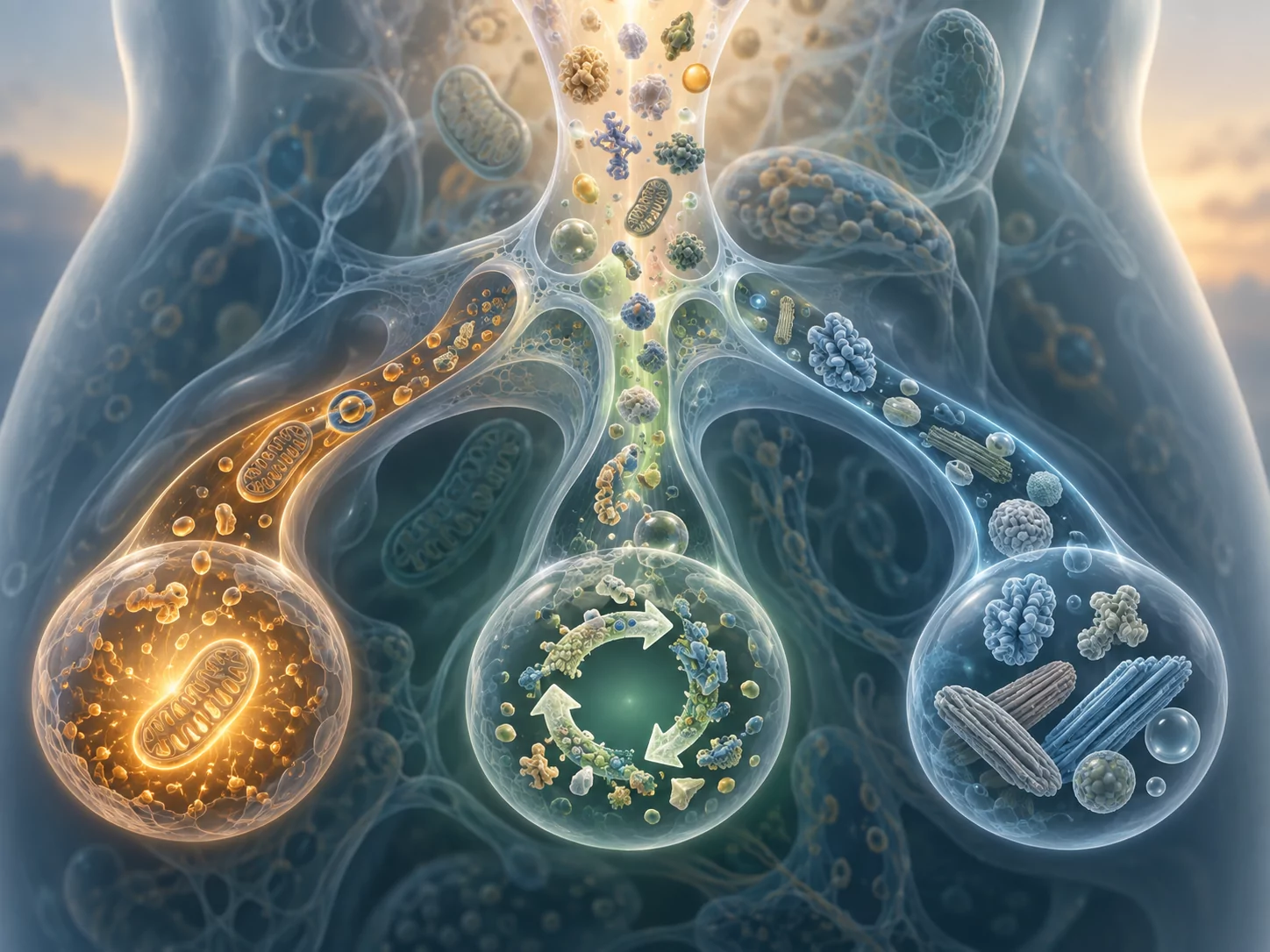 Fat is not simply an aesthetic inconvenience. It is stored energy.
Triglycerides are extraordinarily efficient energy reserves, containing far more usable energy per unit mass than hydrated glycogen. During fasting, adipose tissue releases fatty acids that can fuel much of the organism, while the liver converts part of that supply into ketone bodies.
Functional proteins, by contrast, perform work.
They form enzymes, transport systems, muscles and structural components.
Some protein is inevitably used during fasting, but preserving functional tissue as far as possible improves survival.
This basic distinction alone demonstrates why the organism cannot simply be imagined as a furnace burning whatever lies nearest.
Different materials have different biological value.
What About Deposits, Cysts and Other Altered Tissues?
This is where the subject becomes more difficult — and more interesting.
Hygienist literature contains numerous accounts of abnormal growths, swellings, deposits or altered tissues changing during prolonged fasting.
Modern medicine generally demands controlled imaging, histology or other objective measurements before attributing such changes to fasting.
That standard is reasonable when we want to establish causation.
But it should not lead us to pretend that observations made outside controlled trials do not exist.
Repeated observation is not the same as proof.
It is also not nothing.
It is where many investigations begin.
The appropriate position, in our view, is therefore neither:
“fasting certainly dissolves every abnormal tissue”
nor:
“if the mechanism has not yet been completely demonstrated, the observation is meaningless.”
Instead:
observe carefully, document whenever possible, distinguish the observation from the proposed mechanism, and keep the question open.
This is particularly important because modern cell biology has already demonstrated degrees of selectivity that earlier models of “bulk degradation” did not anticipate.
Autolysis and Autophagy Are Related Ideas — Not Synonyms
This brings us to a distinction that deserves its own article.
The terms sound remarkably similar:
autolysis — self-dissolution
autophagy — self-eating.
They also overlap conceptually.
But scientifically they are not synonyms.
Modern autolysis is primarily the enzymatic self-destruction of damaged or dead cells and tissues.
Autophagy, by contrast, is an actively regulated process occurring in living cells. Cellular material is enclosed, transported to lysosomes and broken down so that useful components can be recycled.
It can also be selective — removing damaged mitochondria, malformed proteins or other particular structures while leaving others intact.
In this sense, autophagy appears to explain part of what the old Hygienist concept of autolysis was attempting to describe.
Part — not all.
The Hygienist concept operated at the level of the whole organism.
Autophagy operates at the level of cellular housekeeping and recycling.
The connection between them deserves to be explored carefully.
And that is where we will go next.
The Body Decides
Perhaps the simplest way to understand Hygienic autolysis is this:
when food stops arriving from outside, the organism must reorganise what already exists inside.
It does so selectively.
It uses stored energy.
It reallocates resources.
It breaks some structures down while maintaining others.
It changes the balance between preservation and recycling.
And we cannot consciously choose the order in which all of those processes occur.
We can decide to fast.
We cannot decide where the fast will act first.
The organism decides.
Whether every element of the old Hygienist interpretation will eventually find a precise biochemical explanation remains an open question.
But the underlying observation is increasingly difficult to dismiss:
the fasting body is not passive, and it is not random. It is organised, adaptive and selective.