


When the Body Tells Us That the Fast Is Over
To stop eating and to starve may sound like the same thing.
Within the Natural Hygiene tradition, however, they describe two profoundly different physiological conditions.
Herbert M. Shelton defined the distinction very clearly: fasting begins when food is withdrawn and ends with the return of natural hunger; starvation begins when natural hunger has returned and food is still withheld.
Modern medical terminology does not always use the words fasting and starvation in this precise sense. Yet the distinction is extremely important for understanding the experience of prolonged fasting.
A body living from its reserves is not in the same condition as a body whose usable reserves have become insufficient to protect essential tissues.
When Hunger Disappears
One of the greatest fears people have before fasting is simple:
“I will be hungry.”
And one of the greatest surprises is discovering that hunger disappears.
In the fasting tradition described here, once the initial phase has passed and fasting metabolism becomes established, physical hunger ceases.
I have experienced this repeatedly myself and I have observed it in every person I have personally accompanied through a prolonged fast.
The first hours or days can include appetite, habitual hunger, thoughts about food and the expectation of eating at familiar times.
Then something changes.
As glycogen reserves decline, fat mobilisation increases and ketosis becomes established, the physical request for food disappears.
The person is still not eating.
Yet the body is no longer asking to be fed from outside.
This phenomenon is sufficiently characteristic that Shelton regarded the absence of natural hunger as one of the defining features of the fast itself.
The experience is difficult to understand fully until it has been lived.
There is a substantial difference between craving, wanting food, thinking about food or eating out of habit, and the unmistakable physical sensation of true hunger.
Once someone has experienced both, the difference can be striking.
A Body Living From Within
During this period, the body is not without fuel.
Its fuel is coming from within.
Stored fat is mobilised. Fatty acids supply energy. The liver produces ketone bodies. Glucose continues to be manufactured internally wherever it remains necessary.
The organism also changes how it uses its own tissues.
Modern physiology confirms that fasting is a regulated metabolic adaptation rather than indiscriminate self-destruction: fat becomes the predominant energy reserve, while several mechanisms reduce the rate at which essential protein must be consumed.
Natural Hygiene went further.
Shelton described the fasting organism as preferentially using stored reserves, surplus material and less essential tissue while preserving vital structures for as long as adequate reserves remained.
Whether every part of that interpretation can eventually be translated into modern biochemical mechanisms is a question we will return to in the articles on autophagy and tissue recycling.
For now, the important observation is simpler:
the fasting organism behaves selectively.
It has priorities.
What Happens During the Fast
Longer fasts can produce very characteristic outward signs.
Body odour can become exceptionally strong.
Breath changes noticeably during ketosis, partly because volatile compounds such as acetone are eliminated through the lungs. This rise in breath acetone during fasting has been directly measured.
Sweat may also acquire an unusually intense and unpleasant smell.
The tongue commonly develops a thick whitish coating.
Bowel movements can continue even though no new food is entering the digestive tract. This is less mysterious than it may seem: faecal matter contains not only food residue but also bacteria, mucus, shed intestinal cells, bile products and material that was already present in the bowel before the fast began.
In the fasting practice I have followed, enemas may also assist the evacuation of intestinal material; because that subject deserves proper consideration of its own, we will discuss it separately.
These manifestations are traditionally described in Natural Hygiene as part of the organism's increased work of elimination. Shelton himself wrote extensively about what he called the body's “organic house cleaning” during fasting.
Modern physiology uses different language and does not reduce these phenomena simply to the excretion of undefined “toxins”.
The observations themselves, however, should not be confused with the interpretation placed upon them.
The Tongue Can Change Very Quickly
There is another phenomenon that I have repeatedly observed and that deserves to be recorded precisely as an observation.
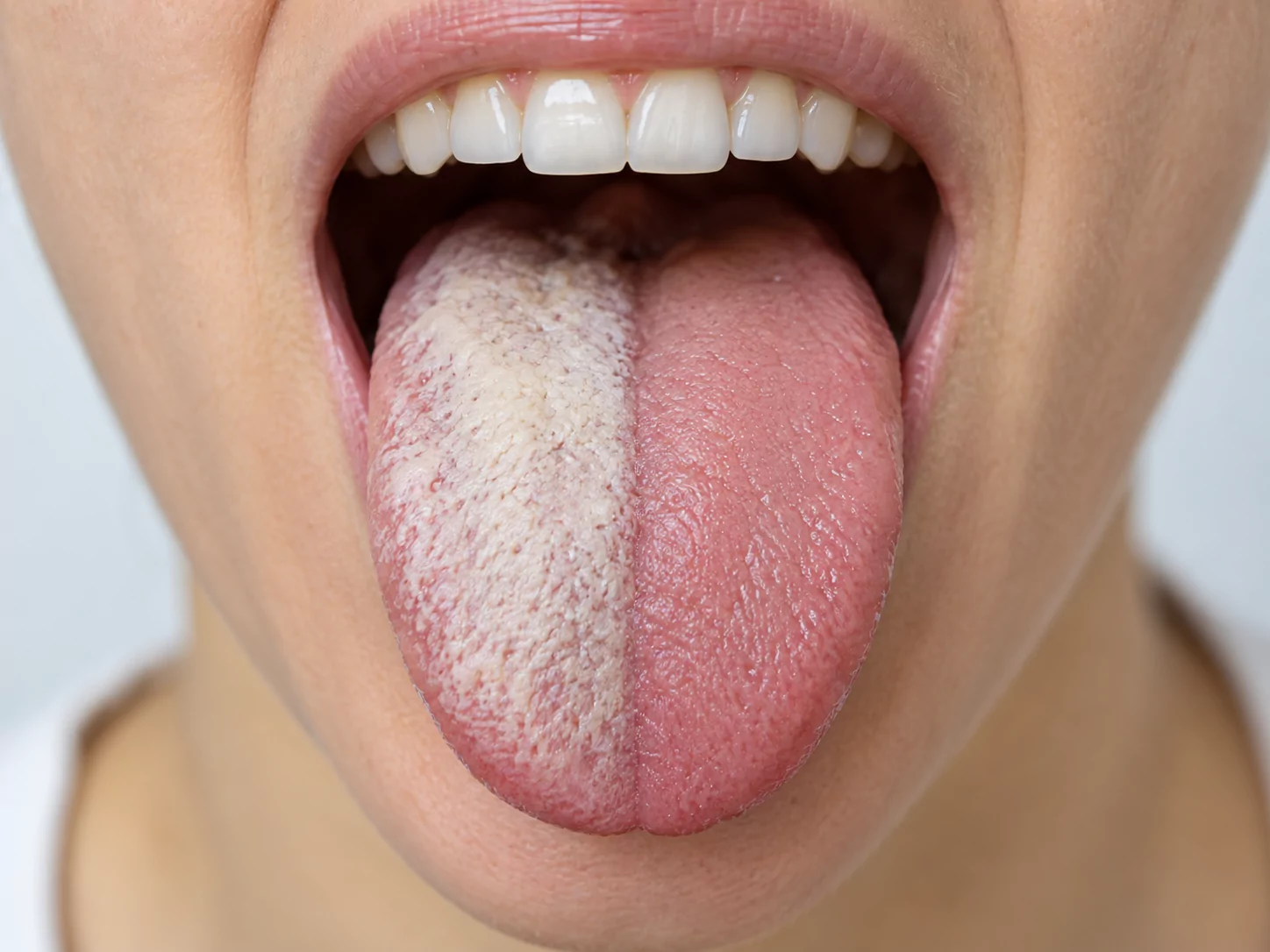 During the fast, the tongue may remain heavily coated for days.
Then, towards the end of the fast, the change can occur surprisingly quickly.
In my own fasts, and in those I have personally followed, I have seen a heavily coated tongue become substantially clean and pink again within approximately twelve hours.
It has not appeared to me as a slow, gradual fading over several days.
It has been much more like a transition.
I am not presenting twelve hours as an established physiological measurement. It is an observation repeated sufficiently often in my experience to deserve attention.
And importantly, the tongue is not the deciding signal.
Natural hunger is.
If genuine physical hunger returns while the tongue is still coated, hunger takes precedence.
The fast is over.
The Return of True Hunger
This is the point around which Shelton's distinction between fasting and starvation revolves.
Natural hunger returns.
Not boredom.
Not appetite stimulated by the smell of cooking.
Not the wish to chew something.
Not anxiety about food.
Physical hunger.
Shelton regarded its return as the body's announcement that the physiological fast had reached its natural end. His definition was categorical: fasting ends with the return of natural hunger; continuing food deprivation afterwards belongs to starvation.
This corresponds closely to what I have experienced personally.
For me, the body seems to remain remarkably quiet while it can comfortably live upon its internal resources.
Then the message changes.
Feed me.
That signal deserves respect.
I would therefore express the Natural Hygiene principle very simply:
When true hunger returns, hunger commands.
The appearance of the tongue is secondary.
The theoretical duration of the planned fast is secondary.
The number of days already completed is secondary.
The body has spoken.
There is, however, an important distinction between describing this criterion and turning it into a self-treatment protocol. Scientific studies show that subjective hunger responses during food deprivation vary, and prolonged fasting can also produce clinically important disturbances that subjective appetite alone cannot detect. For that reason, the return of hunger should not be presented as the sole medical safety measure for an unsupervised prolonged fast.
From Fasting to Starvation
This is where the distinction becomes physiologically important.
During fasting, the body can obtain much of its energy from stored fat while adapting its metabolism to conserve essential structures.
But the reserves are finite.
Eventually, if food continues to be withheld, the body reaches a stage at which maintaining life requires increasingly destructive use of functional tissue.
Protein breakdown accelerates.
Muscle and eventually vital structures become increasingly vulnerable.
At that point the adaptive strategy of fasting has crossed into depletion.
That is what the Hygienist terminology calls starvation.
It is not simply “more fasting”.
It is a different physiological situation.
An Internal Intelligence
The experience gives the powerful impression that the organism possesses what we might call an internal intelligence.
I use the expression deliberately.
It does not imply that cells make conscious decisions.
It describes the extraordinary coordination through which the organism continually decides — biochemically — what to mobilise, what to conserve, what to recycle and what it can afford to lose.
During fasting, some resources are released readily.
Others are defended.
Some metabolic processes diminish while others intensify.
Fuel use changes.
Hormonal signals change.
Cellular recycling changes.
From the Natural Hygiene perspective, this intelligence appears to go further still: the organism seems to make use first of what is surplus, unnecessary, altered or less useful before sacrificing structures essential to life.
Modern physiology does not yet establish that broad proposition as a universal rule.
But neither is the fasting body merely burning itself indiscriminately.
There is organisation.
There is hierarchy.
There is selection.
The old computer analogy that comes to my mind is ScanDisk and defragmentation.
Stop continuously adding new material.
Examine what is already there.
Reorganise it.
Recover what is useful.
Dispose of what is no longer useful.
It is only a metaphor.
But my own experience has given me good reason to take the underlying question seriously.
What Happened to My Spine
My interest in this question is also connected with something documented in my own medical history.
In 2007 I suffered a severe bilateral pleuropneumonia and spent a prolonged period in hospital.
From that time onwards I underwent numerous chest X-rays.
Because chest radiographs also include part of the vertebral column, the images repeatedly showed arthritic calcifications along my spine.
From 2010 onwards, chest radiography also formed part of my periodic maritime medical examinations required for navigation, giving me a further series of comparable images over time.
After my first prolonged fasts, something unexpected happened.
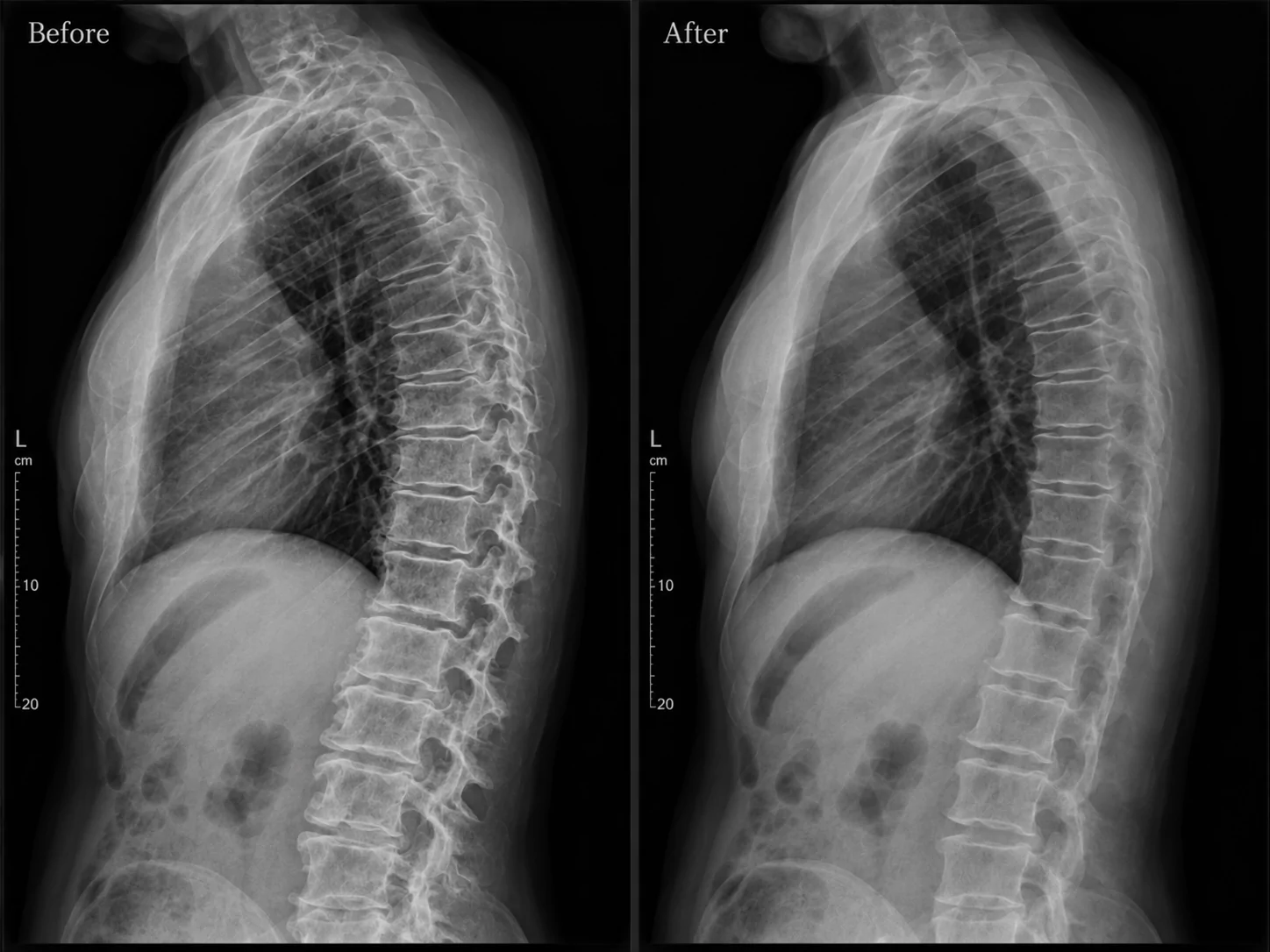 During one of those examinations, the doctor of the maritime health authority compared my radiographs and pointed out, with considerable surprise, that the calcifications previously visible along my spine had disappeared or markedly diminished.
I had not asked him to look for this.
He noticed it.
When he told me, I replied that during the intervening period I had undertaken fasting.
I subsequently showed the radiographs to other doctors who had previously followed me during and after the pneumonia.
They independently confirmed the same change.
Their reaction was also one of surprise.
They explained to me that in their clinical experience this was not the expected course: articular and spinal calcific changes generally do not disappear spontaneously and tend, if anything, to become more evident with ageing.
This remains an observation from my own medical history rather than a controlled clinical experiment.
It does not establish the mechanism responsible for the radiographic change.
But the change itself was not simply my subjective impression: several doctors examining serial radiographs observed and confirmed it.
That difference matters.
Mobility After Fasting
A less easily documented but remarkably recurrent observation has concerned mobility.
People I have accompanied through fasting have repeatedly described themselves afterwards as more mobile.
Joints seem freer.
Movements that had become stiff feel easier.
The body can give the impression of having recovered an elasticity gradually lost over time.
This observation does not tell us by itself what has happened to cartilage, connective tissue, inflammatory processes, tissue water, calcification or muscular tension.
Those are separate questions.
But when a subjective observation occurs repeatedly in different people, it deserves to become a question rather than being discarded because its mechanism is not yet known.
Knowing When to Stop
Fasting therefore contains an apparent paradox.
At the beginning, people fear hunger.
Then hunger disappears.
The body adapts and lives from within.
Later, if the fast is carried sufficiently far, natural hunger returns.
For the Natural Hygiene tradition, that sequence contains its own message:
absence of true hunger belongs to the fast; the return of true hunger calls for food.
That is also the pattern I have repeatedly observed.
And perhaps this is the most important distinction between fasting and starvation.
The purpose of fasting is never to see how long a human being can endure without food.
It is to allow a physiological process to take place without crossing the point at which that process begins to damage the organism it was meant to serve.
The body has limits.
Learning to fast also means learning to listen to them.
