
Fasting is one of the oldest practices associated with human health, spirituality and self-discipline.
Long before the development of modern nutritional science, people in widely separated parts of the world voluntarily abstained from food for religious, philosophical, ritual or health-related reasons.
Its recurrence across cultures and across centuries suggests that fasting belongs to a very ancient part of human experience. Modern historical and medical reviews confirm that voluntary fasting has been practised for millennia and appears in numerous religious and cultural traditions.
Ancient Roots
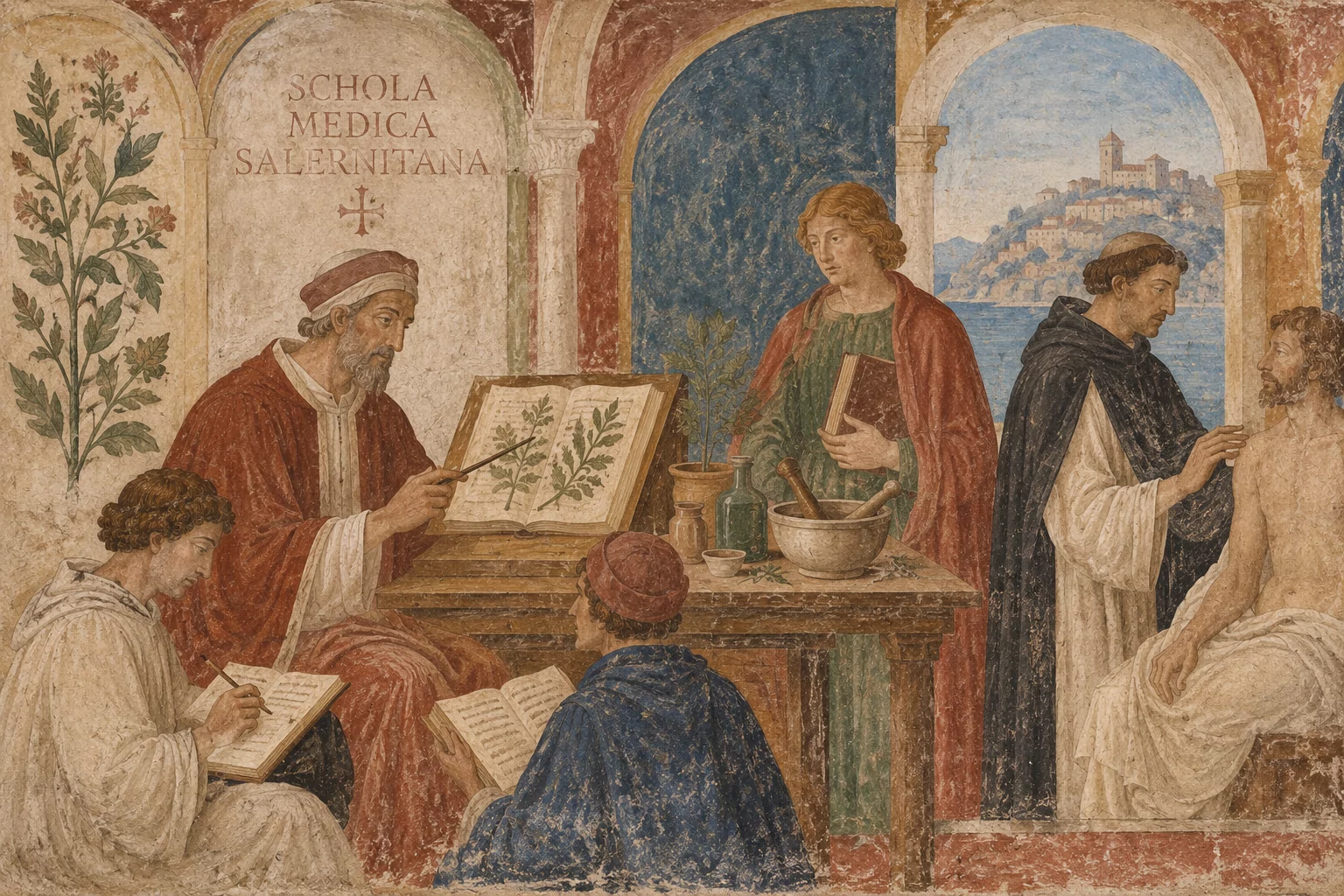 Historical traditions describe fasting in ancient India, Persia, China, Egypt, Mesopotamia and Greece.
In the Greek world, abstinence from food appeared in religious and philosophical contexts as well as in ideas concerning health and discipline. Later biographical traditions also associate Pythagoras with periods of fasting undertaken in preparation for study or initiation. As with many accounts transmitted from antiquity, some of these stories belong as much to tradition as to verifiable biography.
What is clear is that food, abstinence and bodily regimen were already closely connected with concepts of health in Greek and Roman medicine. This relationship continued into medieval European medicine, including the tradition of the School of Salerno, where diet, moderation and the regulation of daily life occupied an important place.
Fasting in Religious Traditions
 Perhaps the strongest historical continuity of fasting has been preserved by religion.
Judaism established specific fasting days, including Yom Kippur. Christianity incorporated fasting from its earliest centuries and developed many different forms of abstinence within monastic, ascetic and popular practice.
In Islam, sawm, particularly the fasting of Ramadan, became one of the Five Pillars.
Fasting also occupies an important place in Hinduism, Jainism, Buddhist traditions and other Asian religious practices. The forms vary considerably: complete abstention, restricted eating periods, avoidance of particular foods, or longer periods of voluntary renunciation.
Many of the best-known religious narratives associate fasting with a moment of transition.
The biblical tradition describes Moses fasting for forty days, Elijah undertaking a prolonged fast in the wilderness, and Jesus fasting for forty days before beginning his public ministry.
Christian history later associated fasting with hermits, monks, saints and mystics, including Benedict of Nursia, Francis of Assisi and many others.
Across these different traditions, fasting repeatedly appears alongside preparation, purification, contemplation and transformation.
From Spiritual Discipline to Natural Health
During the nineteenth century, fasting began to acquire a new place within movements concerned with natural living and health.
In the United States, what would later become known as Natural Hygiene developed through the work of figures such as physician Isaac Jennings, Sylvester Graham and physician Russell Thacker Trall.
The movement traced its beginnings to Jennings' work from around 1822, while Graham began his campaign for physiological and dietary reform during the following decade. Their approaches differed, yet they shared the idea that health depended fundamentally upon the conditions in which the organism lived rather than solely upon external remedies.
Fasting gradually became one of the practices explored within this tradition.
In the twentieth century, Herbert M. Shelton (1895–1985) became one of the most influential representatives of Natural Hygiene. He wrote extensively about fasting and supervised many fasting experiences during decades of practice. His The Hygienic System: Fasting and Sun Bathing appeared in its first edition in 1934.
For Shelton and other Hygienists, fasting was understood within a broader philosophy of physiological rest and reliance upon the organism's own regulatory processes.
That distinction would later become important: within Natural Hygiene, fasting was considered less a “treatment applied to disease” than a condition in which the organism was given an opportunity to direct its resources differently.
The European Fasting Tradition
A parallel history was developing in Europe.
One of its best-known figures was the German physician Otto Buchinger (1878–1966). After personally undergoing a nineteen-day fast following a severe rheumatic illness, Buchinger devoted much of his professional life to therapeutic fasting.
His book on therapeutic fasting, published in 1935, helped systematise an approach that combined fasting with medical observation, physical activity, nature and a strong contemplative component. His work gave rise to a European clinical tradition that continues today.
Other European physicians and practitioners developed their own approaches during the twentieth century, including Maximilian Bircher-Benner in Switzerland and later practitioners in France, Germany, Britain, Spain and Italy.
By the second half of the twentieth century, fasting had therefore developed along several parallel paths: religious practice, Natural Hygiene, naturopathic traditions and forms of medically supervised fasting.
The Russian Scientific Tradition
Russia developed a particularly important and comparatively little-known tradition of fasting research.
During the nineteenth century, Russian physiologist Viktor Vasilievich Pašutin (1845–1901) and his school carried out extensive experimental work on metabolism, energy exchange and the physiological consequences of starvation. His studies contributed to the development of pathological physiology as an experimental discipline, and his work on metabolism during fasting was considered an important part of that research programme.
During the twentieth century this line took a new direction through the work of Soviet psychiatrist Yuri Sergeyevich Nikolaev (1905–1998).
Nikolaev studied medicine in Moscow and specialised in psychiatry. Over several decades he developed what became known in Russian as RDT — Razgruzočno-Dietičeskaja Terapija, usually translated as fasting-dietary therapy or controlled fasting therapy. His doctoral work in 1960 dealt specifically with fasting in schizophrenia and its physiological basis.
His work gradually extended beyond an individual clinical practice.
In 1970, an instructional and methodological document on RDT for neuropsychiatric disorders was issued through the State Research Institute of Psychiatry of the Ministry of Health of the Russian Soviet Federative Socialist Republic, with Nikolaev identified as its compiler.
Over the following decades, fasting departments and practitioners influenced by this school appeared in different parts of the Soviet Union.
Nikolaev's book Fasting for Health (Golodanie radi zdorov'ja) became one of the principal works through which this Russian tradition reached a wider public; a second expanded edition was published in Moscow in 1988.
The Russian history is particularly significant because fasting developed there within a partially institutional medical framework rather than exclusively within alternative-health movements.
That continuity did not disappear with the Soviet Union. In 2005 a Russian Ministry-associated institute produced a physicians' manual entitled The Application of Fasting-Dietary Therapy (RDT) in Restorative Medicine.
Fasting in Italy
Italy also developed its own fasting and Natural Hygiene movement during the twentieth century.
Translations of Shelton and other Hygienist authors contributed to spreading these ideas from the 1960s onwards, followed by associations, practitioners and centres dedicated to Natural Hygiene.
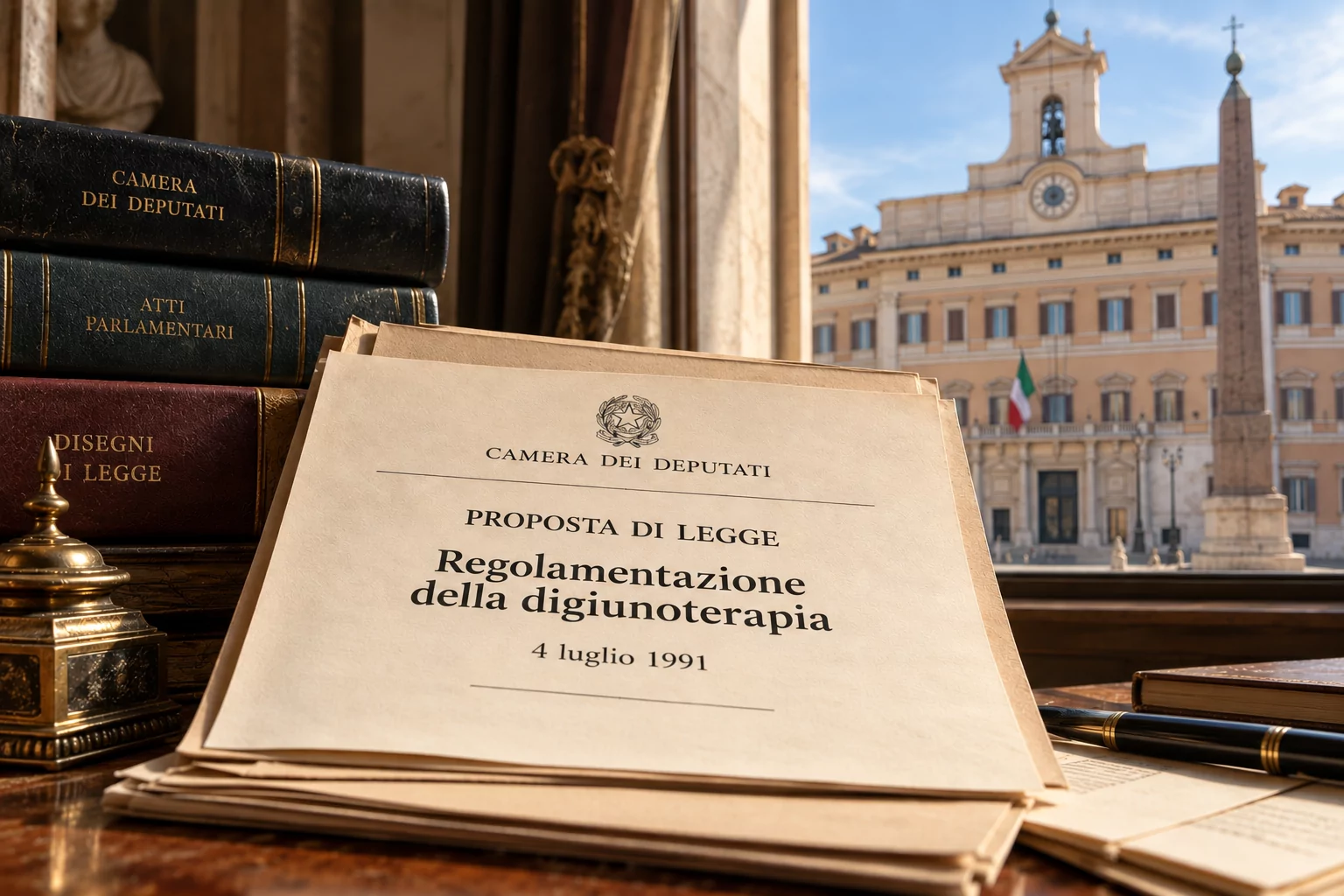 An unusual political milestone occurred on 4 July 1991, when a group of members of the Italian Chamber of Deputies led by René Andreani formally presented Bill No. 5808, entitled “Regolamentazione della digiunoterapia” — Regulation of Fasting Therapy.
The parliamentary record confirms both the title and the date of presentation.
The proposal itself is historically revealing. Whatever one's view of its medical claims, it shows that by the beginning of the 1990s therapeutic fasting had achieved sufficient visibility in Italy to become the subject of a formal parliamentary proposal.
It is from this document that much of the historical material behind this article was originally drawn.
Sergei Filonov and the Development of Dry Fasting
The Russian tradition later produced another development: the systematic exploration of dry fasting, in which both food and liquids are temporarily withheld.
One of the contemporary figures to whom NHF gives particular importance is Dr Sergei Ivanovich Filonov.
Filonov grew up in a medical family and trained in medicine. In his own account, Nikolaev's work was a major influence on his early interest in fasting. After medical school he worked at the Goryachinsk resort in Buryatia, near Lake Baikal, an environment in which the Russian fasting tradition was already present.
Over years of personal experimentation, clinical observation and study of different Russian fasting approaches, he became particularly interested in dry fasting.
 His book Dry Therapeutic Fasting — Myths and Reality, published in Barnaul in 2008, brought together his experience and his interpretation of the Russian fasting tradition. The work is catalogued by the Russian State Library.
Filonov subsequently developed an approach known as Fractional Dry Fasting, in which periods of dry fasting are organised into separate stages rather than undertaken as a single continuous prolonged fast. His published material places this method within the wider history of Russian RDT and earlier approaches to dry fasting.
We will examine the different forms of fasting — including water fasting and dry fasting — separately.
Here his importance is historical: Filonov represents a contemporary continuation and development of a Russian fasting tradition that stretches back through Nikolaev to the physiological research of the nineteenth century.
From Ancient Practice to Contemporary Research
At the beginning of the twenty-first century, fasting entered another phase of its long history.
Research interest increased rapidly, and fasting began appearing again in scientific literature under terms such as intermittent fasting, periodic fasting, prolonged fasting and fasting therapy. European expert panels have also published consensus guidelines for medically supervised fasting therapy.
The language has changed many times across the centuries.
Fasting has been described as purification, religious observance, ascetic discipline, physiological rest, Natural Hygiene, fasting therapy, RDT and, more recently, a subject of metabolic and cellular research.
Yet the practice itself has survived all of those changing interpretations.
For thousands of years, human beings have deliberately stopped eating for a period of time — to observe, to prepare, to heal, to seek clarity, or simply to discover what happens when the body is allowed to live without the continuous arrival of food.
Its history is still being written.